
Most music press outreach fails for one simple reason: the list is wrong. I’d rather pitch 30 to 80 writers who already cover my genre than send 300 cold emails that get ignored.
Here’s the whole process in plain English: pick the coverage type, choose one story angle, find recent writers in your lane, vet each contact, send a short pitch, and track every reply. The article’s main point is simple: smaller, tighter outreach usually beats mass outreach.
What I’d take from it:
- Start with the ask: review, premiere, interview, podcast spot, or local preview
- Pick one hook: debut, hometown date, collab, sound change, or label milestone
- Use recent bylines: focus on the last 6 to 12 months
- Sort contacts by fit: local and niche outlets often make more sense for indie releases
- Keep pitches short: about 150 to 200 words
- Follow up once: usually after 5 to 7 days
- Track results: replies, coverage, passes, and no-response patterns
A few numbers stand out. Digital outlets may work on 1 to 3 weeks of lead time. Print can need 2 to 3 months. Local press often needs 3 to 6 weeks. Those timing gaps matter as much as the contact list.
My short take: this is a guide about being selective, not loud. Instead of chasing the biggest names, I’d build a lean list of writers who already cover artists like me, then send each one a clear ask with one listening link and a reason the story fits their beat.
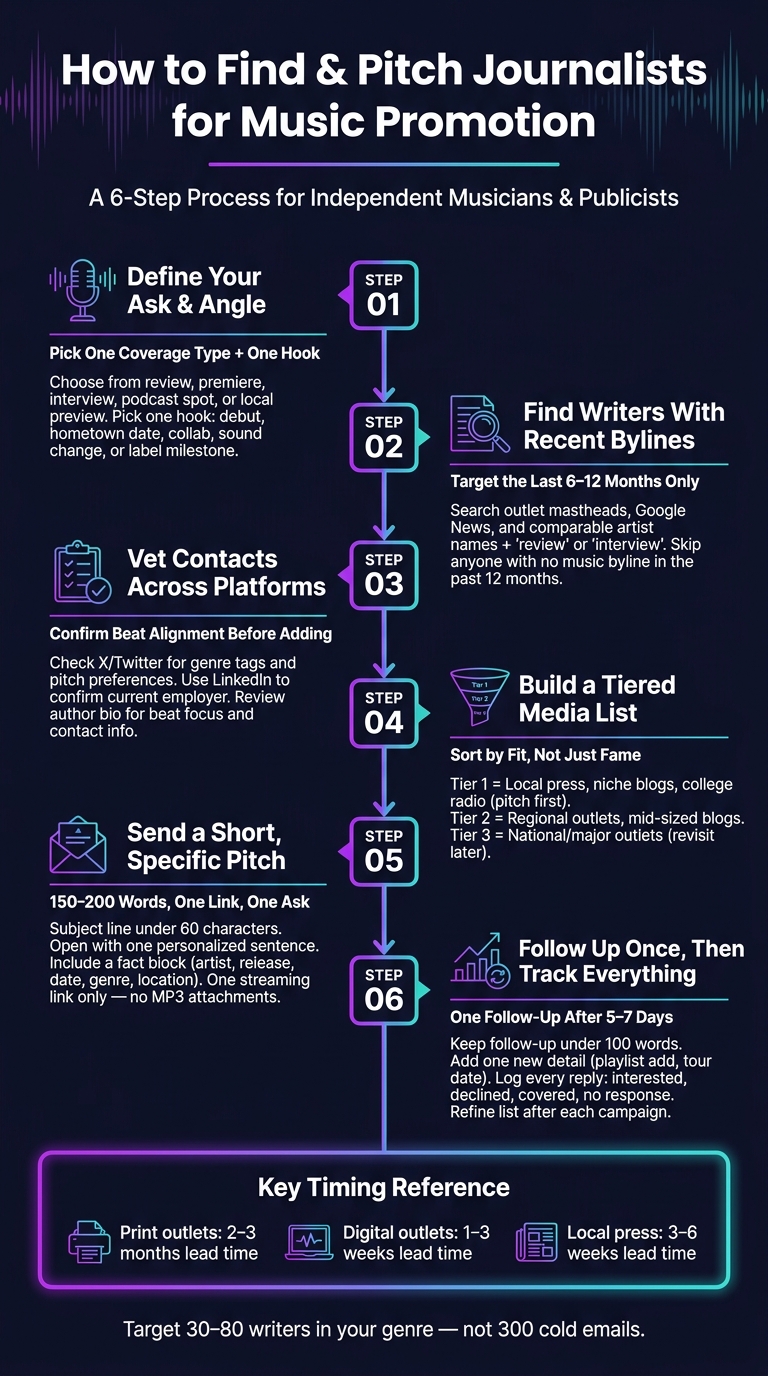
Music Press Outreach: 6-Step Process for Finding & Pitching Journalists
Find journalists and bloggers who already cover your genre
With your coverage type and angle locked in, start where the beat is active. Go after outlets that already cover your sound. Recent bylines matter more than old media lists.
Check outlet sites, mastheads, and recent bylines
Start with national music sites, niche blogs, and local outlets that line up with your audience or tour markets. Head to their music or entertainment sections and scan articles from the last 6–12 months. Focus on reviews, premieres, and interviews about artists who sound like you, based on the coverage type you picked earlier.
For each piece that fits, write down the journalist’s name, the type of coverage, and the angle they used. Then check the site’s masthead or the writer’s profile page to make sure they still work with that outlet. If their last music byline is older than 12 months, skip them.
"Check publication mastheads, writer bios, and Twitter/X profiles. Many rock journalists list their email publicly." – Promoly
From there, expand your search by looking at similar artists. That’s often where extra names show up.
Search for comparable artists in Google News and genre-specific blogs
Pick 3–5 artists with a sound close to yours. Search their names with terms like review, interview, feature, or single in Google and Google News. This helps you spot outlets and writers who already pay attention to that lane.
When you find an outlet that looks like a fit, use site search to go further. A search like site:pitchfork.com [artist name] review can show how often that outlet covers artists in the same space. Then click into the writer’s author page and look for patterns. Do they cover your subgenre on a regular basis, or was it just a one-off? If they run a recurring column or series, flag that.
Check X, LinkedIn, and writer bios to confirm beat alignment
Once you have a name, make sure they still cover your niche before adding them to your list. On X (formerly Twitter), check their bio for genre labels like “jazz critic” or “metal journalist.” Then scan recent posts to see what they’re sharing now. A lot of writers also post pitch preferences right in their bio.
LinkedIn helps you confirm where they work now. If they’ve moved into PR or a non-media job, take them off your list. Use those platforms along with the writer bio to confirm the beat before you save the contact.
| Platform | What to look for |
|---|---|
| X (Twitter) | Genre tags, recent shares, pitch preferences |
| Current job title, employer, recent activity | |
| Author page / bio | Beat focus, preferred story formats, contact info |
Once you’ve got current names that match your beat, vet each one for outlet fit before adding them to your media list. Then sort the names by outlet size, genre fit, and story angle.
sbb-itb-888513b
Vet contacts and build a media list you can actually use
Once you’ve got names from bylines, mastheads, and profiles, don’t blast them all with the same email. Trim the list first. The goal is simple: keep the people who make sense for this release and set aside the rest.
Filter contacts by genre, outlet size, and story fit
Use three filters to narrow your list to people worth contacting.
The first is genre alignment. Check whether they’ve covered artists who sound like you in the last 6–12 months, not just one random time. A writer who covers your lane on a steady basis is far more useful than someone who briefly dipped into it once.
The second is outlet type. Split contacts into groups like local press, niche blogs, regional publications, national outlets, college or community radio, and podcasts. That gives you a clearer view of who belongs in your first wave and who can wait.
The third is fit for your current release. This part matters a lot. If a writer mostly reviews major label albums, they’re probably not a realistic Tier 1 contact for an independent artist putting out a debut EP. A local alt-weekly columnist who often spotlights emerging acts is a much better match. Rank people by fit and reach so your time goes to the contacts most likely to say yes.
| Tier | Typical Contacts | Best Use |
|---|---|---|
| Tier 1 | Local press, niche genre blogs, college radio, scene podcasts | Lead with these; highest fit for most independent releases |
| Tier 2 | Regional outlets, mid-sized genre blogs, larger podcasts | Pitch after Tier 1; solid reach with realistic response potential |
| Tier 3 | National outlets, major publications, commercial radio | Keep on file; revisit as you build momentum |
Track the details that improve future outreach
A media list is only useful if it helps with the next pitch. That means storing more than names and email addresses. Small notes like “full-length albums only,” “prefers streaming links,” or “needs 2–3 weeks’ lead time” can save you from sending the wrong pitch to the wrong person.
Here’s what to track:
| Field | What to Track |
|---|---|
| Outlet Name | Publication, blog, station, or podcast name |
| Outlet Type | Local press, niche blog, regional, national, radio, podcast |
| Journalist Name | The specific writer, editor, host, or DJ |
| Role/Title | Staff writer, freelancer, music editor, show host |
| Email Address | Direct contact; avoid generic inboxes when possible |
| Genre Focus | Specific sub-genres they cover |
| Coverage Example | Link to a recent article or episode featuring a comparable artist |
| Last Contact Date | Logged in MM/DD/YYYY format |
| Response Status | Replied, covered, passed, no response |
| Notes/Preferences | Pitch length, link format, lead time, content type preferences |
Use those notes to shape your next email, not just fill a spreadsheet. A list like this gets better every time you use it.
Write pitch emails that are short, specific, and easy to act on
A strong contact list helps, but it won’t do much if the email misses the reporter’s beat or lands at the wrong time. Your pitch should make the basics clear fast: who you are, what you’re pitching, and why it fits their coverage.
Build the pitch around one clear ask
Keep the full email around 150–200 words. That’s usually enough to give a journalist what they need without stuffing the note with extra detail.
Keep the subject line under 60 characters so it looks clean on mobile. Something like "Austin indie band returns with protest single 09/15/2026" gets to the point right away. Compare that with "New music from me". One gives a hook. The other gives them almost nothing.
Start with one personalized sentence tied to their actual work. For example: "I saw your recent piece on emerging R&B vocalists in New York and thought my upcoming EP might fit your coverage." That shows you paid attention. Then make the ask plain: "Would you be interested in reviewing my new single?"
After that, add a short fact block:
Artist: Luna Reyes Release: "Neon Highways" (Album) Release date: 10/04/2026 Genre: Synth-pop / Electropop Location: Miami, FL Label: Independent
Then include one listening link – a private SoundCloud stream, an unlisted promo page, or a trackable link. Skip MP3 attachments. Big files can trip spam filters and slow things down on the other end.
Follow up once and keep the timing realistic
Send the pitch based on the outlet’s lead time. Print outlets usually need 2–3 months. Digital outlets often work on 1–3 weeks. Local outlets tend to need 3–6 weeks, especially when you have a local angle.
If you don’t hear back, send one follow-up 5–7 days after the first email. Keep it under 100 words. Briefly mention the first pitch and add one small new detail if you have it – a regional playlist add, a confirmed tour date, anything that makes the story feel more current. More follow-ups usually do more harm than good.
After you send the pitch, log every reply so you can tighten the list for the next round.
Track responses, refine your list, and keep outreach organized
Once the pitch is out, keep using the same list to track what happened next.
Log opens, replies, coverage, and non-responses
For every pitch, record the send date, follow-up date, response status, and coverage result. Tag replies as interested, declined, wrong beat, covered, or no response. Those labels make it easier to tell the difference between a journalist who might respond to a better angle and one who just isn’t a match.
Go a step past reply status and note the release type (single, EP, album), story angle, and asset shared for each send. Small details can tell you a lot. One blogger may skip general announcements but keep replying to exclusive premieres. Another may only cover acts from a certain region. That kind of pattern helps you make the next campaign tighter without adding extra work.
After each campaign, remove repeat non-fits and move responsive contacts to the top of the list.
Use Promoly to manage promo sends and track engagement
If you’re handling multiple releases, manual tracking gets messy fast.
Promoly puts sends, feedback, and real-time opens, plays, and downloads in one place, so you can follow up based on actual engagement. It also supports separate sender profiles. That means publicists working with multiple artists can keep each campaign tied to the right branding instead of sending everything from one generic address.
Conclusion: Build a smaller, better-targeted press list
When you log each campaign, your list gets better over time. Find the right writers, track results, and use each campaign to make the next one more precise.
FAQs
How many journalists should I pitch?
Prioritize quality over quantity. For a first campaign, start small with a well-researched list of journalists who cover your genre. In many cases, 10 contacts is enough to get going.
For established releases, you can widen that list to 30 to 50 outlets, from major publications to niche blogs. Keep your outreach personal. Use Promoly to track engagement, then tighten up your list based on who opens, listens to, and responds to your music.
What if I can’t find the right writer’s email?
If you can’t find a direct email address, check the publication’s masthead, the writer’s bio, and social profiles like X. You can also try the publication’s press contact form or use research tools to track down current contact details.
Once you have a contact, add it to Promoly so your outreach stays organized. It also helps to build real relationships over time, since warm introductions often work better than cold emails.
Should I pitch local outlets before national ones?
Often, it works better to stagger your outreach. Start with larger national outlets, then move to mid-tier publications and smaller blogs.
That approach can help you build momentum and keep your release timing under control.
Use Promoly to track which journalists engage with your music, so you can focus follow-ups on the people who’ve already shown interest. And always tailor your pitch to the outlet’s genre focus and the writer’s beat.